USDA-Backed Project Boosts East African Agriculture: Joint Trials for Fall Armyworm Management Show Promise
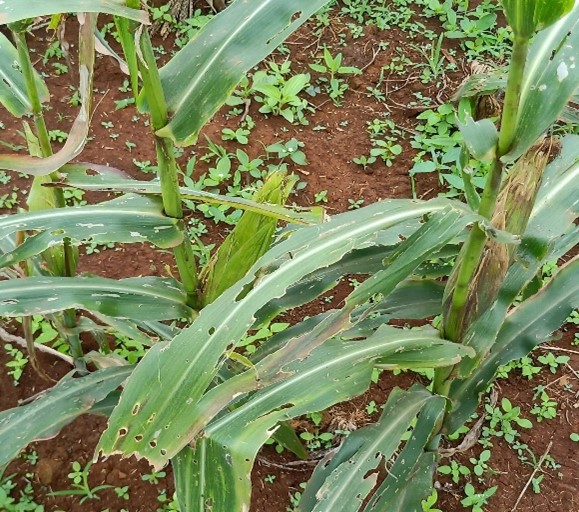
In recent years, East African agriculture has faced a formidable foe: the Fall Armyworm (FAW). To tackle this invasive pest, the East African Community (EAC) initiated a groundbreaking project to evaluate the effectiveness of a new solution: BASF’s Nomax 150 SC, using a new collaborative approach to testing pesticides. Supported by the United States Department of Agriculture (USDA) Foreign Agricultural Service (FAS), this project to strengthen EAC-level pesticide regulation has significant implications for the future of food security in Kenya, Uganda, and beyond.
Advancing Pest Management
In 2018, the EAC committed to harmonizing guidelines for pesticide testing and registration across its member states. This initiative aimed to foster cooperation, for instance, through mutual recognition of approved pesticides and of member state field trial findings. In 2019, partner states started conducting pilot efficacy trials, revealing inconsistencies in trial protocols related to application rates and timing.
In response to these challenges, the EAC formed a Technical Working Group (TWG) on pesticides in February 2021 to enhance regional coordination.
USDA Support
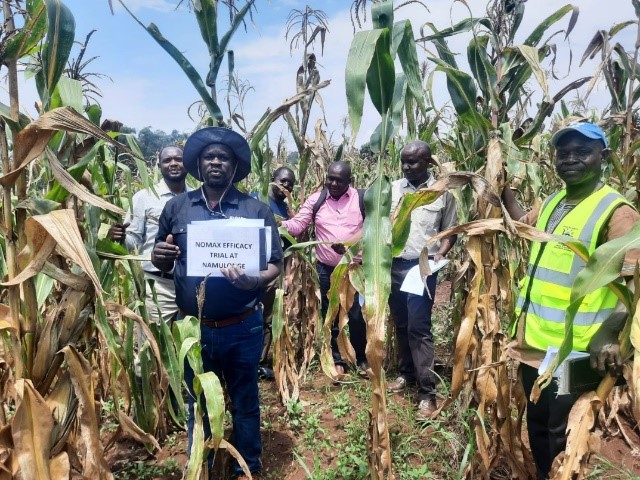
Recognizing the project’s importance, the EAC secured financial backing from USDA-FAS via the Africa Food Safety Initiative (AFSI) partnership with the University of Missouri, enabling confirmatory trials for Nomax 150 SC in Kenya and Uganda. These trials, conducted in collaboration with Kenya Agriculture Livestock Research Organization (KALRO) (Kenya) and National Agricultural Research Organization (NARO) (Uganda), aimed to assess Nomax 150 SC’s efficacy in controlling FAW on maize, with a standardized trial protocol ensuring consistency.
Key Findings
In August 2023, a team visited trial sites in Kenya and Uganda. In Uganda, despite challenges posed by drought in some areas, the trials demonstrated Nomax 150 SC’s efficacy in controlling FAW. Meanwhile, in Kenya, where the upper midland regions were considered high-risk for FAW, the results were equally promising. The performance of Nomax 150 SC surpassed expectations, providing hope for more resilient maize farming.
Recommendations and Future Prospects
The next steps involve finalizing reports, presenting findings to the EAC TWG, and sharing results widely. These recommendations will shape the 17th Sectoral Council on Agriculture and Food Security (SCAFs) in early 2024 and could lead to the regional registration of a new product for use against FAW in the EAC.
This experience will inform the EAC as it advances toward implementing the Mutual Recognition Mechanism (MRM) with USDA and USAID support. This mechanism provides protocols for joint trials involving scientists and TWG members from all partner states and reduces the need for replication of slow and expensive field trials. The EAC’s ability to test and register safe and effective products in a timely manner will benefit farmers as they respond to changing pest pressures.
In conclusion, these Nomax 150 SC trials mark a significant milestone in East African pest management and regional cooperation, promising resilient and sustainable maize farming practices and contributing to food security and economic development in the EAC region.
 AFSI
AFSI 